


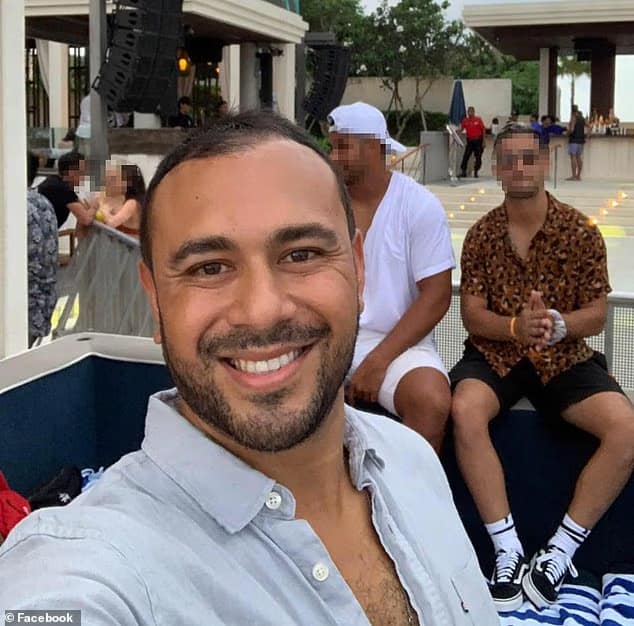
Kerobokan governor Tunggul Buwono confirmed the men were excluded from Independence Day sentence cuts and given 12 days in isolation, months after a major contraband raid at the overcrowded jail
Four Australian prisoners at Bali’s Kerobokan jail have been refused remission and placed in disciplinary isolation after officers found mobile phones in their possession. Drug trafficker Lamar Aaron Ahchee and the three men convicted over the fatal shooting of Melbourne man Zivan Radmanovic — Darcy Jenson, Mevlut Coskun and Paea I Middlemore Tupou — were left off the list of inmates granted sentence reductions on Indonesia’s Independence Day. Prison governor Tunggul Buwono said all four were given 12 days in isolation without visits or mail. Around 1,041 other prisoners received remission on Monday.
What the governor said
The three men convicted over the villa shooting were found with a phone between May and June, according to Buwono. Ahchee’s device was discovered on 9 August, shortly before the remission list was submitted to the government for approval.
“They could not get remission (for their sentences) as they violated the rules. They were allegedly found with a mobile phone,” the governor said.
All four have been placed on the Register F list, which records inmates who have breached prison rules. Their status will be reviewed every six months, and Buwono indicated they may become eligible for a sentence reduction next year provided there are no further violations.
Why 17 August matters
Remission in Indonesia is not an informal reward. Indonesia’s Directorate General of Corrections states that general remission is granted annually on 17 August, the country’s Independence Day, and operates on a graduated scale — from one month in a prisoner’s first year up to six months for those who have served six years or more. Religious remission is administered separately, according to the Bali Directorate General of Corrections.
Official guidance sets out both administrative and substantive requirements for recipients, including good behaviour and participation in rehabilitation programmes. Kerobokan itself was built for 300 inmates.
A prison already under scrutiny
The phone seizures follow a difficult year for the facility. On 20 May 2026, the Directorate General of Corrections carried out a large-scale surprise inspection at Kerobokan at around 2am, recovering not only mobile phones but multiple types of narcotics and alcohol. The department said the drug circulation involved prisoners.
The operation was led by the Directorate of Security and Intelligence, with officials later coordinating with Bali police and Indonesia’s National Narcotics Agency and handing over evidence. Departmental spokesperson Rika Aprianti confirmed the three categories of prohibited material found in the same sweep.
The prison’s then-head, Hudi Ismono, was temporarily removed from his post. Bali’s corrections chief Decky Nurmansyah clarified that this was a temporary deactivation pending an internal investigation rather than a dismissal. Officials said the inquiry extended to the organisation and prison personnel, with the Directorate General warning that employees found to have taken part in drug trafficking could face criminal proceedings. Police began questioning witnesses to establish how the goods entered the facility.
The available reporting does not link the four Australians to the May operation, and no connection between the two matters has been established.
Where the sentences now stand
The three men convicted over the shooting have reached the latest stage of their appeals. On 3 July, Indonesia’s Supreme Court — the Mahkamah Agung, not the High Court — ruled on the case under numbers 1163 K/PID/2026 for Jenson and 1167 K/PID/2026 for Coskun and Tupou. The court rejected appeals from both the prosecution and the defendants while modifying the sentences.
The outcome leaves Jenson serving the longest term at 18 years, despite not having entered the villa. Tupou’s sentence was reduced from 18 years to 17, and Coskun’s from 18 to 16. Both avoided the death penalty.
Rahul Singh, the lawyer for Coskun and Tupou, said the defence respected the Supreme Court ruling but remained unhappy with the length of the sentences, noting that both terms had come down from 18 years.
At the original Denpasar sentencing, judges cited the defendants’ lack of prior criminal records and their cooperation with investigators as mitigating factors. Presiding judge Wayan Suarta said the men were young and still had the opportunity to change, describing punishment as preventive rather than retributive. The court also recognised that the crime had caused “deep trauma” to the victims’ families.
The shooting and the unidentified organiser
Radmanovic, 32, a father of six, was killed at a holiday villa in Munggu in June last year. Sanar Ghanim, another man staying at the property, was beaten and shot. The three defendants told the court they had been hired to collect a debt from Ghanim. Both men allegedly had links to Melbourne’s underworld.
Court evidence reported by ABC indicates the three communicated through multiple group chats on the encrypted messaging application Threema, with investigators alleging those exchanges formed part of the planning. Police alleged the two gunmen fled on motorcycles, transferred to a vehicle driven by Jenson and left Bali, with the handguns then dumped in a small river.
Jenson was arrested at Jakarta’s Soekarno-Hatta airport as he attempted to leave Indonesia. Coskun was detained in Singapore and Tupou in Cambodia, both with Interpol assistance.
Evidence before the court established that an unidentified person financed elements of the operation — airfares, villa accommodation and the weapon — and allegedly issued instructions for the attack. That person’s identity remained unresolved at the time of the trial.
Tupou told the court he had been informed there would be only one person at the villa, and that he saw a man entering a bathroom whom he believed to be Ghanim. He said the confrontation escalated quickly, that he believed the man approaching him was holding something, and that he had not intended to kill Radmanovic. Jenson testified that he tried to speak to the two shooters after collecting them from a pre-arranged meeting point, and that when neither responded he turned up his music and kept driving. His lawyers pointed to his use of his own passport and personal phone number for bookings and purchases as part of their argument that he did not know what the others intended.
Fears for witnesses in Australia
The consequences of the case have extended beyond Bali. During the trial, relatives of the victims and witnesses raised concerns about their safety in Australia. ABC reported that Jazmyn Gourdeas’s Melbourne home was broken into after proceedings began, and that her sister Daniella Gourdeas’s beauty salon was firebombed.
The three principal witnesses — Jazmyn Gourdeas, Daniella Gourdeas and Sanar Ghanim — declined to appear in person because of fears for their safety. Their interview statements were read to the court instead.
The fourth Australian
Ahchee, a Queenslander who had lived in Bali for eight years, was arrested in May last year after receiving two packages containing 54 individually wrapped Lindt chocolates, each holding 8.3g of cocaine. He was sentenced to 12 years for drug trafficking, later cut to nine years in January by a panel of judges at the Bali High Court. He must also pay a fine of two billion Indonesian rupiah, around $169,000 AUD, or serve a further six months if he cannot.
